

 Español
Call us
+86-19818583496
+86-0577-68586867

Our team is proud to offer on time guarantee and product guarantee to customer satisfaction.
Read MoreIf you have worked with printing equipment long enough, clamp-side breakage of a printing machine torsion bar spring is probably not unfamiliar. The machine may start making unusual noise, print accuracy drops, and after inspection, the torsion spring is found broken—almost always at the clamped end.
This pattern is not accidental. In many maintenance cases, the majority of failures in a printing machine torsion bar spring occur at the clamp position. Understanding why this happens helps reduce repeated downtime and unexpected part replacement.
A printing machine torsion bar spring works under torsional load: one end is fixed, while the other end twists during operation. When torque is applied, stress typically appears near the fixed end.
The reason lies in geometry. At the clamp, the printing machine torsion bar spring transitions from a free-moving section to a constrained one. This creates a stress concentration zone at the edge of the clamp.
In practical terms, this behaves like repeatedly bending the same point on a wire. Even if the rest of the printing machine torsion bar spring remains intact, the fixed section becomes the area where damage accumulates first.
Design details can make this worse. Some clamp structures apply uneven pressure, especially in single-bolt designs. Sharp clamp edges without proper rounding may introduce additional stress concentration. Over time, even slight loosening can allow micro-movement, increasing wear at the clamp interface of the printing machine torsion bar spring.
Many users describe the failure of a printing machine torsion bar spring as sudden. In reality, the process starts much earlier.
Each print cycle creates one load and unload action. For a printing machine torsion bar spring, this means continuous stress repetition. Small cracks begin at the clamp area where stress is highest, then slowly expand with each cycle.
A simple estimate shows how quickly cycles accumulate:
|
Parameter |
Example Value |
|
Printing speed |
100 sheets/min |
|
Daily runtime |
8 hours |
|
Daily cycles |
48,000 |
|
Monthly cycles |
Over 1,000,000 |
Under such conditions, even a properly manufactured printing machine torsion bar spring approaches its fatigue limit within months, depending on material and usage.
Because usage cycles are rarely tracked, replacement often happens only after failure.
Material quality plays a noticeable role in how long a printing machine torsion bar spring lasts. Springs made from standard spring steels, combined with controlled heat treatment, usually show more stable fatigue performance.
Surface treatment also matters. Processes such as shot peening introduce compressive stress on the surface, helping delay crack formation in a printing machine torsion bar spring.
In contrast, lower-cost alternatives may use simpler materials or less controlled heat treatment. Without proper surface strengthening, the clamp area becomes more vulnerable, and the printing machine torsion bar spring may fail after a shorter service period.
In daily operation, several factors tend to accelerate clamp breakage:
|
Factor |
Effect on Printing Machine Torsion Bar Spring |
|
Uneven clamping force |
Creates localized stress points |
|
Sharp clamp edges |
Increases stress concentration |
|
Loose bolts |
Causes micro-movement and wear |
|
Surface damage |
Speeds up crack growth |
|
Mismatched clamp size |
Bring about a pressure imbalance |
Even when the printing machine torsion bar spring itself meets standard specifications, these external conditions can shorten its usable life.
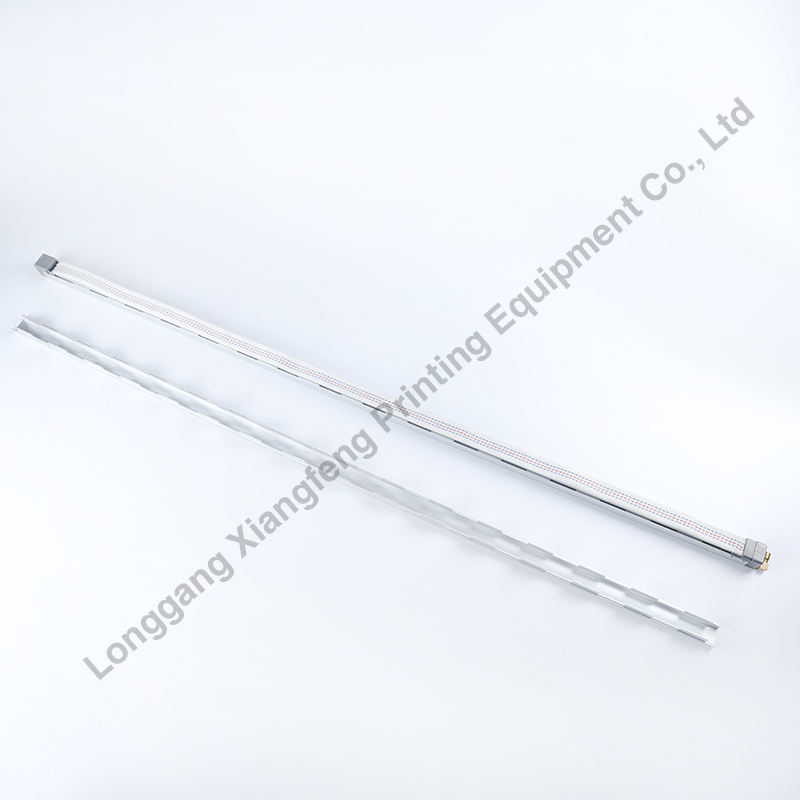
From an application point of view, small adjustments can help extend the service life of a printing machine torsion bar spring.
Keeping basic records of installation time or estimated cycles makes replacement more predictable. Checking clamp conditions—such as bolt tightness and surface wear—can reduce unnecessary stress on the spring.
Attention to material consistency and processing details when selecting a printing machine torsion bar spring may also help maintain more stable performance over time.

+86-19818583496
+86-0577-68586867


No.777 Haixi rode, Longgang City, Wenzhou City, Zhejiang, China
On weekdays, we will reply to you or call us within 12 hours of receiving the inquiry.
Copyright © Xiangfeng Printing Equipment Co., Ltd. All Rights Reserved.

Printing Machine Accessries Factory
Contact Us