

 Español
Call us
+86-19818583496
+86-0577-68586867

Our team is proud to offer on time guarantee and product guarantee to customer satisfaction.
Read MoreIn many printing workshops, equipment issues often appear without warning. A press may suddenly stop, the interface displays abnormal characters, or sensors behave inconsistently. After repeated checks, the root cause is sometimes traced back to one vulnerable component: the printing machine circuit board. Static electricity, though invisible, continues to affect the reliability of every printing machine circuit board in daily operations.
Modern printing machine circuit board designs rely on highly integrated chips. Components such as CPUs, drivers, and communication modules contain extremely fine transistor structures. Even a small electrostatic discharge can damage these elements.
In some cases, the printing machine circuit board fails immediately. In others, the damage is gradual. A partially affected chip may still function, but with reduced stability. This explains why a printing machine circuit board may pass initial tests yet cause intermittent faults later.
These hidden failures are particularly difficult to diagnose. A printing machine circuit board might work normally one day and trigger alarms the next, creating uncertainty for maintenance teams.
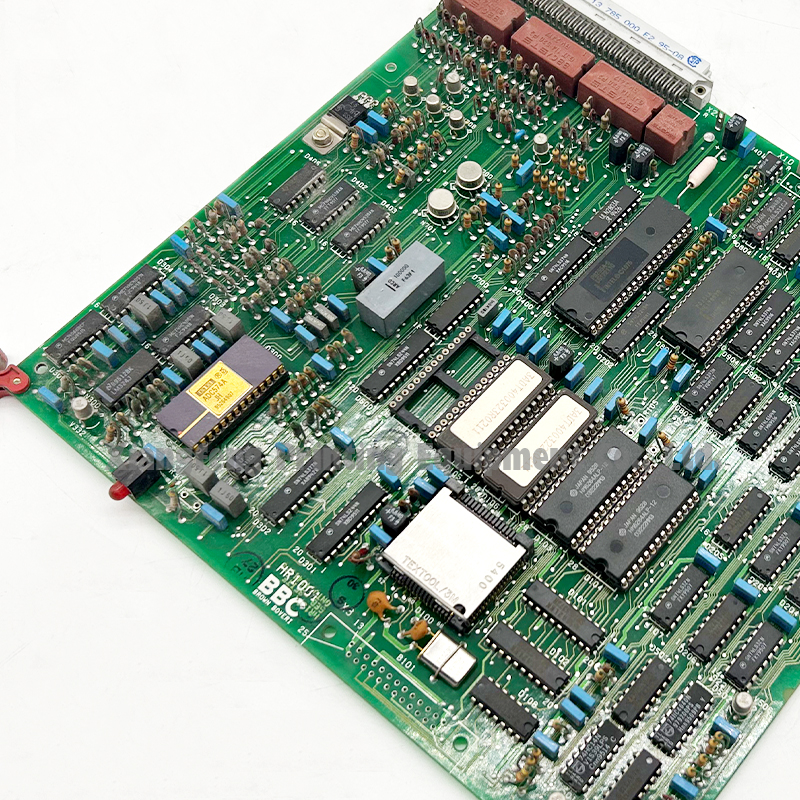
Static electricity is common in printing environments, and multiple factors contribute to its buildup around a printing machine circuit board.
Environmental conditions play a major role. When humidity drops below 40%, static charges accumulate more easily. During dry seasons, the risk to any printing machine circuit board increases noticeably.
Operator behavior is another factor. Walking across insulated floors or wearing synthetic clothing can generate high static voltage. When an operator touches connectors or panels, the discharge may pass directly into the printing machine circuit board.
The printing process itself also contributes. Paper, film, and other materials moving at high speed generate friction, which creates static. Without proper grounding, this energy can travel through the machine structure and reach the printing machine circuit board.
Maintenance scenarios are often overlooked. When a printing machine circuit board is removed and placed on a non-conductive surface, static charges may remain trapped. Handling the board without protection can result in sudden discharge to sensitive components.
Not all printing machine circuit board designs offer the same level of protection. Differences in engineering directly affect how well a board handles static exposure.
Well-designed boards typically include protective components such as transient voltage suppressors and ESD protection devices. Signal lines are reinforced, and grounding paths are carefully planned. These measures help the printing machine circuit board absorb or redirect static energy safely.
In contrast, some boards simplify these protections. Without adequate design considerations, a printing machine circuit board relies heavily on the tolerance of its chips, which may not be sufficient in real-world conditions.
Grounding quality is equally important. Even a well-designed printing machine circuit board can face risks if the overall system grounding is inconsistent or incomplete.
Managing static risk does not require complex changes, but it does require consistency. The following table outlines common risks and corresponding actions related to printing machine circuit board protection:
|
Risk Factor |
Impact on the Printing Machine Circuit Board |
Suggested Action |
|
Low humidity |
Increased static buildup |
Maintain 50–60% humidity |
|
Operator static discharge |
Direct damage to components |
Use wrist straps and grounding points |
|
Poor grounding |
Ineffective static dissipation |
Regularly inspect grounding systems |
|
Improper handling |
Sudden discharge during maintenance |
Use anti-static work surfaces and bags |
|
Friction from materials |
Continuous static generation |
Improve machine grounding and shielding |

+86-19818583496
+86-0577-68586867


No.777 Haixi rode, Longgang City, Wenzhou City, Zhejiang, China
On weekdays, we will reply to you or call us within 12 hours of receiving the inquiry.
Copyright © Xiangfeng Printing Equipment Co., Ltd. All Rights Reserved.

Printing Machine Accessries Factory
Contact Us