

 Español
Call us
+86-19818583496
+86-0577-68586867

Our team is proud to offer on time guarantee and product guarantee to customer satisfaction.
Read MoreAccessories printing machine components are receiving more attention in printing workshops as manufacturers investigate unexpected changes in print quality. When colours begin drifting, registration becomes inconsistent, or fine details appear less defined, operators often look first at ink, paper, or machine settings.
However, maintenance engineers are increasingly finding that small mechanical components deserve equal attention. In many cases, accessories printing machine parts influence printing stability long before a major machine fault develops.
Print Quality Does Not Always Change Overnight
A printing press rarely shifts from excellent results to poor results in a single day.
More commonly, the change develops gradually.
An operator may notice slightly softer image edges during one production run. A few days later, registration requires minor adjustment. After another week, colour consistency may no longer match earlier jobs.
Because these changes appear slowly, they are sometimes mistaken for material variation rather than equipment behaviour.
This is why experienced technicians often include accessories printing machine inspections before making larger process adjustments.
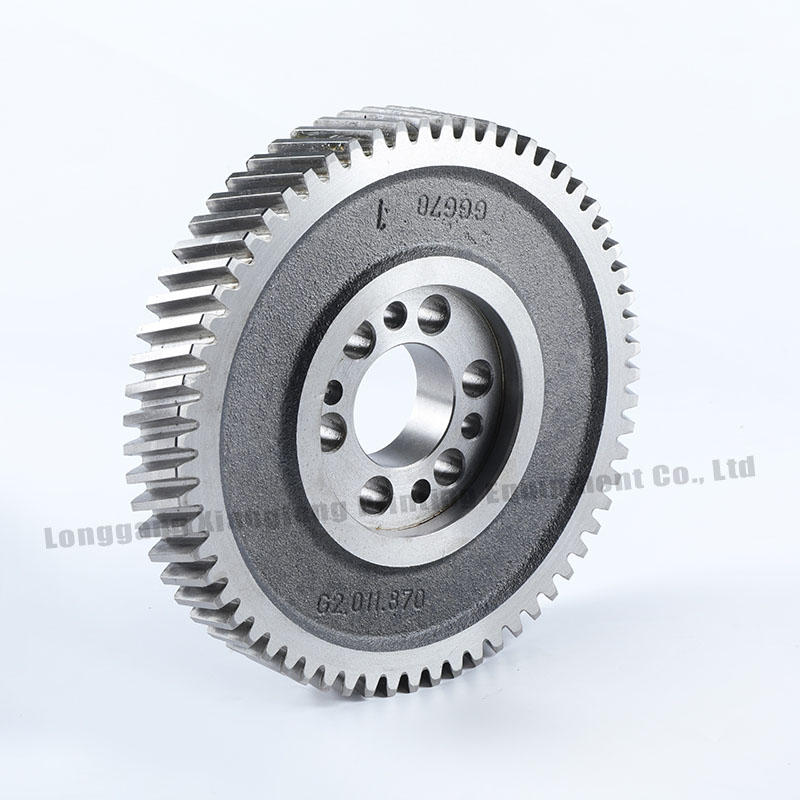
Tiny Components Can Influence Large Equipment
Modern printing equipment contains numerous moving assemblies working together at high speed.
Rollers rotate continuously.
Gears transfer motion.
Bearings support rotating shafts.
Guide components help maintain alignment.
Individually, each component performs a relatively simple task.
Together, they determine whether the machine operates with consistent precision.
When one accessories printing machine component begins wearing differently from the others, the effect may first appear as a slight variation in print quality rather than an obvious mechanical failure.
Registration Problems May Have Mechanical Causes
Registration errors are often associated with calibration.
While calibration remains important, mechanical condition also plays a role.
If rotating assemblies no longer move as smoothly as expected, or if alignment gradually changes during long production runs, operators may notice that printed layers require more frequent correction.
Rather than immediately adjusting software settings, many maintenance teams inspect accessories printing machine components for signs of wear, looseness, or uneven movement.
Sometimes restoring mechanical consistency reduces the need for repeated calibration.
Production Speed Can Reveal Hidden Issues
Some machines perform normally during shorter jobs but behave differently during extended production.
As operating hours increase, vibration, temperature changes, and continuous movement may gradually influence machine stability.
Under these conditions, accessories printing machine parts that appeared satisfactory during initial startup can begin showing subtle differences in performance.
This explains why certain print quality issues become more noticeable during long production batches rather than small sample runs.
The machine has not necessarily failed.
Its operating condition has gradually changed.
Experienced Engineers Watch The Machine Before The Product
A common habit among experienced maintenance engineers is to observe machine behaviour before inspecting finished prints.
They pay attention to movement that seems slightly different from previous production runs.
A roller that no longer rotates with the same smooth rhythm.
A guide assembly requiring more frequent adjustment.
Slight vibration developing during higher production speeds.
These observations may seem unrelated to print quality.
In reality, they often provide early clues that accessories printing machine components should receive closer inspection before production consistency is affected.
Small Changes Often Explain Larger Results
Print quality is influenced by many interacting factors.
Paper, ink, environmental conditions, machine settings, and operator experience all contribute to the final result.
Mechanical condition is another important part of that system.
As printing technology continues improving, manufacturers are placing greater emphasis on identifying small mechanical changes before they become production problems. For this reason, routine inspection of accessories printing machine components is increasingly viewed as part of quality control rather than only equipment maintenance.
Instead of waiting for visible defects to appear on finished products, many printing facilities now recognise that maintaining consistent print quality often begins with paying attention to the smallest moving parts inside the machine.

+86-19818583496
+86-0577-68586867


No.777 Haixi rode, Longgang City, Wenzhou City, Zhejiang, China
On weekdays, we will reply to you or call us within 12 hours of receiving the inquiry.
Copyright © Xiangfeng Printing Equipment Co., Ltd. All Rights Reserved.

Printing Machine Accessries Factory
Contact Us