

 Español
Call us
+86-19818583496
+86-0577-68586867

Our team is proud to offer on time guarantee and product guarantee to customer satisfaction.
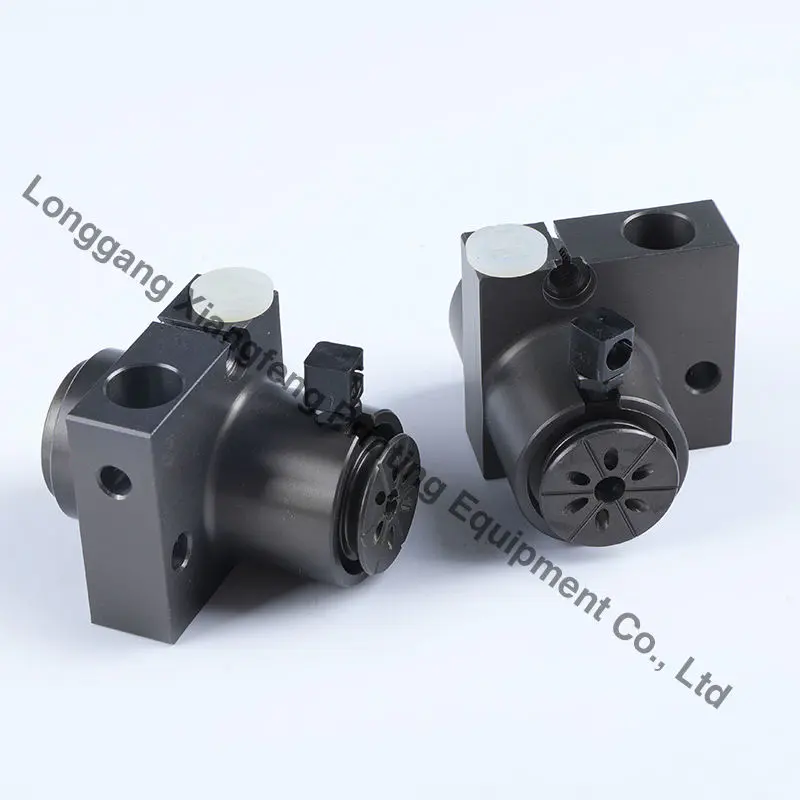
Read MorePrinting machine solenoid valve problems are sometimes reported before a machine actually stops. Operators may simply tell the maintenance team, "The movement feels slower today." There is no alarm on the screen, production is still running, yet something no longer feels quite the same.
Experienced technicians rarely replace a printing machine solenoid valve immediately after hearing that description. Instead, they prefer to watch the machine complete several operating cycles before touching a single tool.
The Few Minutes Usually Matter
In one printing workshop, an engineer stands beside the feeder while another watches the pneumatic cylinder from the opposite side.
Nothing is dismantled.
The same button is pressed several times.
The same movement is repeated again and again.
The technicians are not trying to repair the machine yet. They are trying to answer a simple question.
Is today's movement different from yesterday's?
That comparison often provides more useful information than replacing parts based on a single observation.
A Slow Movement Does Not Point To One Component
Many people assume a slower action automatically means the printing machine solenoid valve has reached the end of its service life.
Field experience is often less straightforward.
Sometimes the cylinder reacts normally during the first few cycles but becomes slightly slower after continuous operation.
Sometimes every movement is smooth except one particular action.
Occasionally, the machine behaves differently only after production speed increases.
Patterns like these encourage maintenance engineers to continue observing before deciding where the problem actually begins.
Experienced Technicians Watch The Entire Sequence
One interesting habit in printing plants is that technicians rarely focus on only one component.
Instead, they watch the complete operating sequence.
Did the cylinder begin moving later than usual?
Did another pneumatic action finish slightly earlier?
Did two movements that were normally synchronized become slightly separated?
Looking at the whole process helps engineers understand whether the printing machine solenoid valve is responsible or whether another part of the pneumatic system is influencing the result.
The movement often tells a more complete story than the component itself.
Yesterday's Records Can Be Surprisingly Useful
Modern maintenance teams increasingly rely on inspection records instead of memory.
An engineer may open last week's maintenance log before opening the machine cover.
The notes show that operators reported a similar change several days earlier, although production continued without interruption.
That information changes the direction of the inspection.
Instead of assuming the printing machine solenoid valve suddenly developed a fault, technicians begin looking for operating conditions that have been changing gradually over time.
Small trends are usually easier to understand than isolated events.
Machines Rarely Change Without Leaving Clues
Printing equipment often provides subtle signals before a noticeable problem develops.
A movement becomes slightly slower.
The operating rhythm changes.
An adjustment takes a little longer than usual.
None of these observations proves that a component has failed.
Together, however, they encourage engineers to inspect the printing machine solenoid valve and the surrounding pneumatic system more carefully.
Many experienced maintenance teams believe these early clues are valuable because they appear while production can still continue normally.
The Inspection Often Starts Before The Repair
One noticeable change in today's printing industry is that maintenance is becoming more observational than reactive.
Rather than waiting for a complete stoppage, technicians spend more time understanding how machines behave during ordinary production.
A printing machine solenoid valve may continue operating while its response characteristics gradually change. Recognising those small differences early allows inspections to be planned without interrupting the production schedule.
For many experienced engineers, solving the problem does not begin with replacing a component. It begins with watching the machine long enough to understand what it is trying to say.

+86-19818583496
+86-0577-68586867


No.777 Haixi rode, Longgang City, Wenzhou City, Zhejiang, China
On weekdays, we will reply to you or call us within 12 hours of receiving the inquiry.
Copyright © Xiangfeng Printing Equipment Co., Ltd. All Rights Reserved.

Printing Machine Accessries Factory
Contact Us