

 Español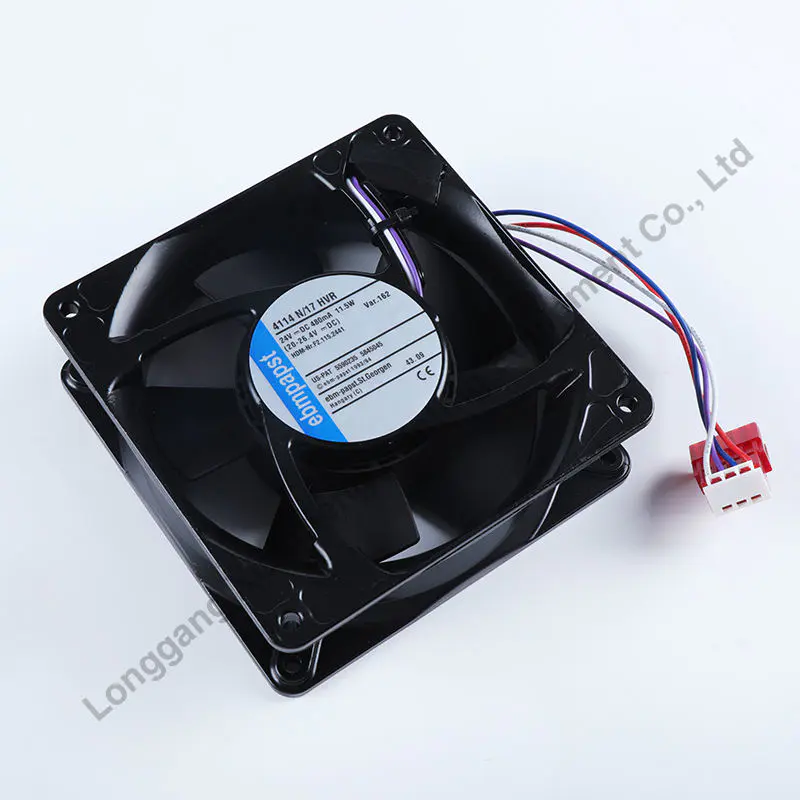
Call us
+86-19818583496
+86-0577-68586867

Our team is proud to offer on time guarantee and product guarantee to customer satisfaction.
Read MoreIn a printing workshop, most attention usually goes to output quality, paper feeding, or ink condition. The motor sits inside the machine and rarely gets discussed unless something changes in the running state. A Printing Machine Motor is still one of the parts that shapes how the whole system behaves during production.
It is not only a “power source”. In practice, it is tied to movement across different sections of the machine, and its working rhythm affects how stable the whole line feels during operation.
Motion is shared across several sections
Printing equipment does not rely on a single movement point. Paper transport, cylinder rotation, and ink transfer all move in coordination.
The Printing Machine Motor drives these actions through belts or direct transmission. One motor may focus on the main drive, while others support feeding or auxiliary systems.
These parts do not run independently. When one section changes speed slightly, the others respond to it.
Different motors inside the same machine
A printing system often contains more than one motor. They are placed in different sections depending on function.
A Printing Machine Motor used in the feeding area is not the same as the one used in the main drive. Each unit has its own task, but they still need to stay synchronized during printing.
In production use, the machine only feels stable when these motors work at a similar rhythm.
Speed alone is not the main concern
In many real cases, operators care more about consistency than raw speed. If a motor runs unevenly, paper position can drift slightly during long runs.
That small shift may not be visible at the start, but it becomes easier to notice after continuous printing.
A Printing Machine Motor that keeps steady movement reduces these small variations. It is less about pushing output and more about keeping the system predictable during long operation.
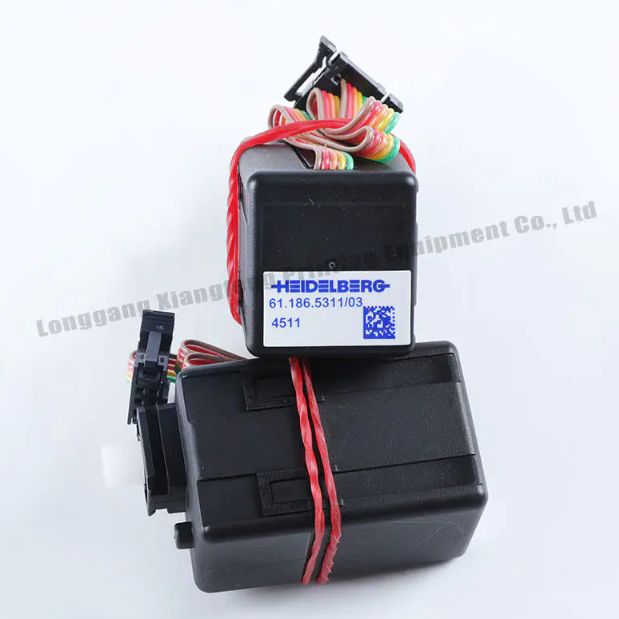
Heat builds up during long use
Printing machines often run for hours without stopping. During that time, motors naturally produce heat.
The way a Printing Machine Motor handles temperature changes affects how it behaves over time. In some machines, airflow is added around the motor area, while others rely on internal structure to manage heat spread.
Workshop conditions are not always stable, so motor behavior under different temperatures becomes part of daily observation.
Not all motors are the same type
Different printing machines use different motor setups. Offset equipment, packaging printers, and digital systems do not follow one fixed structure.
A Printing Machine Motor designed for one machine may not match another without changes in control settings or mounting position.
Because of this, selection is usually linked to the machine model rather than general performance numbers.
Wear usually appears slowly
Motor issues do not normally happen in a sudden way. In many cases, changes are gradual.
A slight increase in vibration or a small change in sound is often the first sign operators notice. These signals usually develop before any real failure occurs.
Since a Printing Machine Motor runs during every production cycle, small differences become easier to detect over time in busy workshops.
It affects more than just movement
Even though the motor is a single component, it indirectly influences other parts of the machine.
If movement becomes uneven, paper feeding and ink alignment can also shift. The system is connected enough that one change can appear in different areas of output.
Because of that, the Printing Machine Motor is often checked during routine maintenance together with other core components.
Practical view from daily use
In normal operation, the motor is not something operators interact with directly. It runs in the background while the machine produces output.
But its condition can be felt in how stable the whole process is. When the movement feels smooth, the system usually requires fewer adjustments. When it feels uneven, small corrections tend to appear more often.
That is why the Printing Machine Motor stays important even if it is not always visible during production work.

+86-19818583496
+86-0577-68586867


No.777 Haixi rode, Longgang City, Wenzhou City, Zhejiang, China
On weekdays, we will reply to you or call us within 12 hours of receiving the inquiry.
Copyright © Xiangfeng Printing Equipment Co., Ltd. All Rights Reserved.

Printing Machine Accessries Factory
Contact Us