

 Español
Call us
+86-19818583496
+86-0577-68586867

Our team is proud to offer on time guarantee and product guarantee to customer satisfaction.
Read MoreA Stainless Steel 3D Printer Nozzle used for ink delivery on a commercial press faces a completely different wear profile than the same-sounding component in additive manufacturing, and buyers sourcing replacement nozzles for label or packaging lines often assume the two categories share testing standards when they do not.
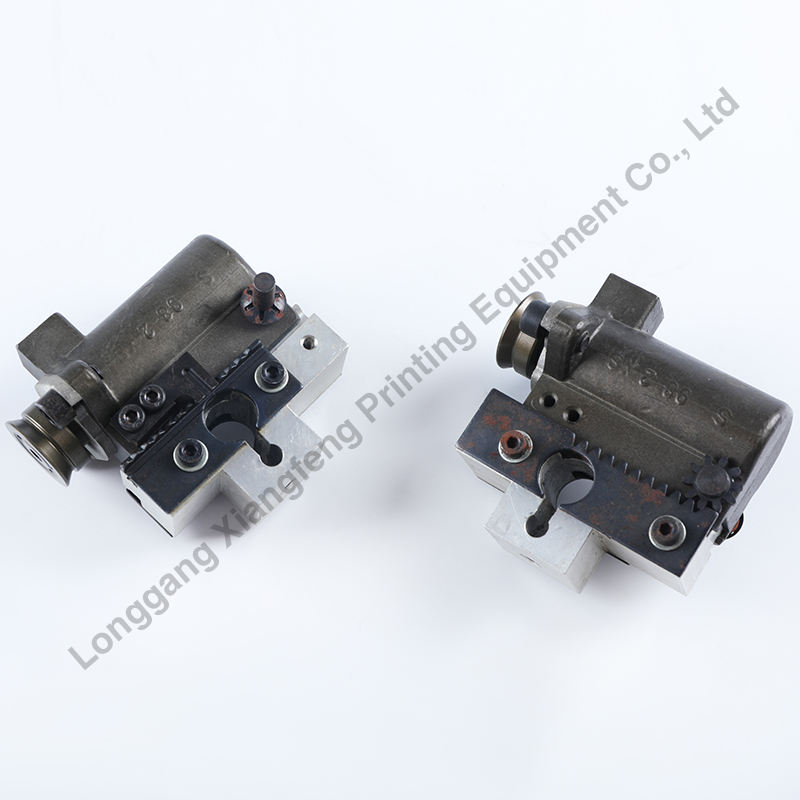
UV-cured inks and certain solvent-based formulations carry pigment particles that behave abrasively against nozzle bore surfaces over repeated use. A Stainless Steel 3D Printer Nozzle hardened through proper heat treatment resists bore widening from this abrasive wear far longer than a nozzle machined from softer stainless stock without hardening, and bore widening is the primary cause of inconsistent ink deposition that shows up as print defects weeks or months into service. Buyers running UV or pigment-heavy ink formulations should request hardness specifications specifically, rather than accepting a general "stainless steel" material claim without a hardness figure attached.
Two nozzles machined to the same nominal bore diameter can still perform differently in the field if one holds tighter tolerance across the production run than the other. A hardened Stainless Steel 3D Printer Nozzle manufactured with tighter bore tolerance control produces more consistent ink flow across a batch of replacement units, which matters directly for buyers replacing multiple nozzles across a production line simultaneously, since inconsistent bore tolerance between units creates visible print-to-print variation that a single well-made nozzle would not reveal on its own.
|
Attribute |
Standard Stainless Nozzle |
Hardened Stainless Nozzle |
|
Abrasive ink resistance |
Lower, bore widens faster |
Higher, holds bore diameter longer |
|
Typical ink compatibility |
Water-based |
UV, solvent-based, water-based |
|
Batch-to-batch consistency |
Depends on tolerance control |
Tighter with hardened process |
|
Best-fit application |
Lower-volume, standard inks |
High-volume, mixed ink formulations |
A Stainless Steel 3D Printer Nozzle intended for multi-substrate work needs verified compatibility across UV, solvent-based, and water-based formulations, since a bore geometry optimized for one ink viscosity may underperform with another. Manufacturers testing nozzles across all three ink categories before listing compatibility give buyers a more reliable basis for cross-application sourcing than a supplier that tests against only one ink type and extrapolates compatibility claims from that single result.
External finish on a nozzle body is easy to inspect visually, but internal bore surface finish requires more specific measurement and directly affects ink flow consistency. A printing press nozzle supplier using precision internal grinding rather than standard drilling alone produces a smoother bore surface that resists ink residue buildup between cleaning cycles, which reduces the frequency of clogging complaints reported by buyers running continuous production shifts on a Stainless Steel 3D Printer Nozzle line.
Nozzles used in packaging print destined for food-contact-adjacent products may fall under different ink migration regulations depending on the importing region, and buyers sourcing a Stainless Steel 3D Printer Nozzle should confirm that UV and solvent ink compatibility claims come with documentation matching their specific end-market regulatory framework rather than a general compatibility statement. A supplier producing for both the European and North American markets typically maintains separate compliance references for each, since permitted ink formulations and testing standards are not identical between the two regions.

+86-19818583496
+86-0577-68586867


No.777 Haixi rode, Longgang City, Wenzhou City, Zhejiang, China
On weekdays, we will reply to you or call us within 12 hours of receiving the inquiry.
Copyright © Xiangfeng Printing Equipment Co., Ltd. All Rights Reserved.

Printing Machine Accessries Factory
Contact Us