

 Español
Call us
+86-19818583496
+86-0577-68586867

Our team is proud to offer on time guarantee and product guarantee to customer satisfaction.
Read MoreSourcing teams replacing Printing Encoding Equipment on a Heidelberg or Manroland press often start by matching pulse count on a spec sheet, then discover during installation that pulse count alone does not guarantee the replacement unit will integrate correctly with the press's existing control system.
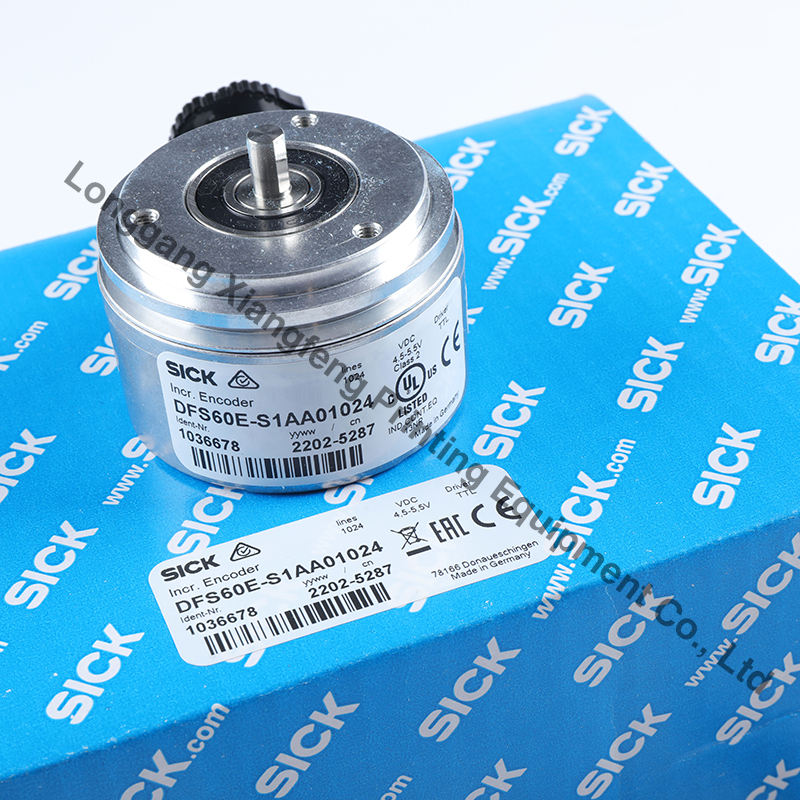
A printing machine encoder rated at a higher pulse-per-revolution count than the original unit does not necessarily improve print register accuracy, because the press's control firmware is typically calibrated to a specific resolution range. Installing mismatched Printing Encoding Equipment can create register errors that are harder to diagnose than a simple failed-part scenario, since the system may appear to function while producing subtly inconsistent output. Buyers should confirm the exact pulse-per-revolution specification of the original unit before ordering a replacement, rather than assuming a higher-resolution unit is automatically an improvement.
A rotary encoder for printing press applications needs an IP-rated housing appropriate to the specific mounting location on the press, since ink mist, paper dust, and mechanical vibration near the cylinder differ substantially from conditions near the feeder or delivery end. Printing Encoding Equipment rated for a cleaner mounting position but installed near an ink zone will accumulate contamination faster than its rated service life would suggest, and buyers should match housing rating to actual mounting location rather than relying on a single generic IP rating across all positions on the press.
|
Vetting Question |
Signal to Look For |
|
Pulse resolution |
Matches original unit's exact PPR specification |
|
Housing IP rating |
Matched to actual mounting location, not generic |
|
Brand cross-compatibility |
Documented fit across Heidelberg, Manroland, KBA models |
|
Connector configuration |
Confirmed against control board generation, not just part number |
Encoders from brands like Baumer or SICK are used across multiple press manufacturers, but register control encoder compatibility between a Heidelberg-configured unit and a Manroland-configured unit is not automatic even when both use encoders from the same original component brand. A supplier maintaining cross-referenced fitment records for Printing Encoding Equipment across Heidelberg, Manroland, KBA, Ryobi, and Komori installations can confirm compatibility directly, while a supplier working only from the encoder brand name risks recommending a unit that fits the mounting but not the press's expected signal configuration.
Press control boards revised across different production years sometimes use different connector pinouts even when the physical encoder housing and mounting remain unchanged. Heidelberg Manroland encoder compatibility claims for Printing Encoding Equipment should specify which control board generation they apply to, since a buyer replacing an encoder on an older press installation risks receiving a unit that fits the housing but requires a connector adapter the supplier did not mention upfront.
Static bench verification confirms an encoder generates pulses, but it does not confirm signal accuracy under the vibration and speed variation typical of an operating press. Suppliers testing Printing Encoding Equipment under simulated rotational speed variation before shipment can catch signal dropout issues that static testing alone would miss, and buyers sourcing for high-speed press applications should ask directly whether pre-shipment testing includes dynamic conditions or only static verification.

+86-19818583496
+86-0577-68586867


No.777 Haixi rode, Longgang City, Wenzhou City, Zhejiang, China
On weekdays, we will reply to you or call us within 12 hours of receiving the inquiry.
Copyright © Xiangfeng Printing Equipment Co., Ltd. All Rights Reserved.

Printing Machine Accessries Factory
Contact Us