

 Español
Call us
+86-19818583496
+86-0577-68586867

Our team is proud to offer on time guarantee and product guarantee to customer satisfaction.
Read MorePrinting Machine Sensor technology plays an essential role in modern printing production by enabling accurate detection, alignment, and process coordination across multiple machine stages. In high-speed printing environments, sensors support stable operation by continuously monitoring material movement, positioning, and system status.
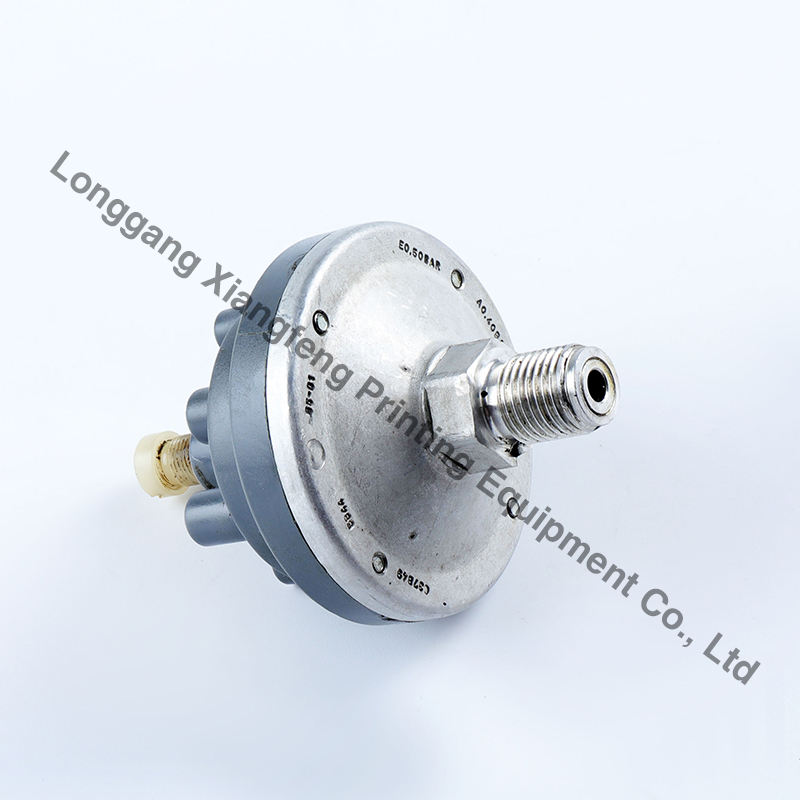
In commercial and industrial printing lines, sensors are commonly used to detect paper edges, registration marks, web tension, and substrate thickness. Optical sensors, photoelectric sensors, and proximity sensors are among the most frequently installed types. In a typical sheet-fed printing machine operating at speeds exceeding 10,000 sheets per hour, sensor response time measured in milliseconds is required to maintain consistent alignment and avoid misfeeds.
Accuracy directly affects output quality. Small deviations in paper position can result in color misalignment or image distortion. Data from production facilities indicates that precise sensor calibration can reduce misregistration-related waste by approximately 15–25% over extended production cycles. Sensors also support automatic adjustment systems that modify feeder speed, pressure settings, or print timing in real time.
Beyond alignment control, sensors increasingly contribute to process transparency. By continuously collecting operational signals, sensors enable operators to monitor production stability without interrupting machine operation. In some facilities, sensor-generated alerts help identify gradual deviations before they develop into visible print defects, supporting early corrective action.
Common functional roles of printing machine sensors include:
Environmental durability is another important consideration. Printing environments often expose sensors to dust, ink mist, vibration, and temperature variation. Many industrial-grade sensors are designed to operate within temperature ranges from 0°C to 60°C and maintain stable signal output under continuous vibration. Enclosures and mounting structures are engineered to reduce contamination and misalignment over time.
Integration with control systems further expands sensor value. Sensor data is transmitted to programmable controllers or embedded control units that coordinate feeder systems, print heads, and finishing modules. In digitally controlled printing systems, sensor feedback enables synchronized operation across multiple stations, supporting stable throughput during long production runs.
Maintenance efficiency is also influenced by sensor performance. Early detection of paper jams, double feeds, or tension irregularities allows operators to intervene before mechanical damage occurs. Facilities that implement structured sensor inspection routines report fewer unplanned shutdowns and more predictable maintenance intervals.
In conclusion, Printing Machine Sensor systems support modern production control by improving detection accuracy, process coordination, and operational reliability. Through precise measurement, environmental resilience, and system integration, sensors contribute to stable printing performance across diverse applications.
FAQs
What types of sensors are used in printing machines?
Common types include photoelectric, optical, and proximity sensors.
Do sensors require frequent recalibration?
Calibration frequency depends on operating conditions and production volume.
Can sensors help reduce printing waste?
Yes, right detection supports alignment and reduces misfeeds.
How do sensors improve print alignment?
They detect paper edges, registration marks, and substrate position to maintain precise alignment.
How do environmental factors affect sensor performance?
Dust, ink mist, vibration, and temperature changes can influence sensor accuracy; industrial-grade sensors mitigate these effects.
Are sensors compatible with digital control systems?
Yes, they can transmit real-time data to controllers for automatic adjustments.

+86-19818583496
+86-0577-68586867


No.777 Haixi rode, Longgang City, Wenzhou City, Zhejiang, China
On weekdays, we will reply to you or call us within 12 hours of receiving the inquiry.
Copyright © Xiangfeng Printing Equipment Co., Ltd. All Rights Reserved.

Printing Machine Accessries Factory
Contact Us