

 Español
Call us
+86-19818583496
+86-0577-68586867

Our team is proud to offer on time guarantee and product guarantee to customer satisfaction.
Read MoreA printing press depends on coordinated movement between cylinders, rollers, feeders, and other rotating components. Behind these movements are transmission systems that transfer mechanical power from one section of the machine to another. A Printing Machine Gear is one of the components responsible for this mechanical connection, helping different moving elements operate according to the required timing and speed.
Although gears are relatively small compared with the overall printing press, their position within the transmission system means that dimensional accuracy, tooth geometry, material, lubrication, and wear can all become important during long-term operation.
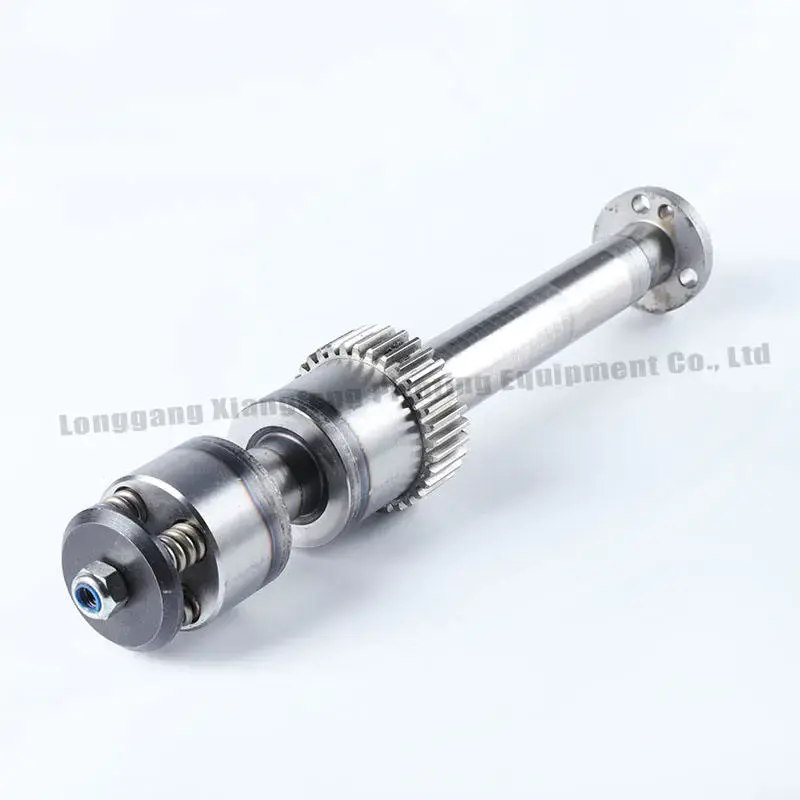
The basic function of a Printing Machine Gear is to transmit rotational movement between shafts or other mechanical components. Different gear arrangements can change speed, direction, or torque according to the requirements of the machine.
On a printing press, this transmission function is closely connected with the coordinated movement of rollers, cylinders, and other mechanisms. The supplier's technical information describes printing machine gears as components used to transfer mechanical energy and coordinate moving parts such as rollers and plates.
Because several components can depend on the same transmission system, a gear cannot always be evaluated independently from the parts surrounding it.
Gear teeth need to engage correctly with their mating components. The geometry of the teeth, pitch, diameter, and overall configuration all influence how rotational force is transferred.
Printing equipment can use different gear configurations depending on the mechanical arrangement. Spur, helical, and bevel gears, for example, have different characteristics in terms of force transmission, speed, noise, and installation requirements. The appropriate configuration depends on the structure of the machine rather than on a universal preference.
For a Printing Machine Gear, this means replacement parts need to match the original transmission arrangement. A gear with a similar outside diameter may still be unsuitable if its tooth profile, bore, width, or mounting dimensions are different.
Gears operate through repeated contact between their teeth, so material selection is closely related to durability and wear resistance. Steel, brass, and engineering plastics can be used for different gear applications, depending on the mechanical load and design requirements.
For a Printing Machine Gear, the selected material also needs to correspond with the operating environment and lubrication method. A gear used in a heavily loaded transmission system may have very different material requirements from a smaller component operating under lower loads.
This is why gear specifications should be considered together rather than selecting material solely according to cost or appearance.
The contact between gear teeth creates friction during operation. Appropriate lubrication can reduce friction and help manage heat and wear at the contact surfaces.
Regular inspection is therefore part of maintaining a Printing Machine Gear. Changes in noise, visible tooth wear, surface damage, or abnormal movement can provide indications that the gear or its surrounding transmission components require attention.
However, gear wear does not necessarily originate from the gear itself. Misalignment, inadequate lubrication, excessive loading, or problems with another connected component can also affect gear operation.
Mechanical timing has particular importance in printing because different sections of the press need to maintain coordinated movement. If a transmission component develops excessive play or changes its intended relationship with another component, the resulting mechanical movement can be affected.
This gives the Printing Machine Gear a role beyond simple power transmission. Its dimensional relationship with other gears and shafts contributes to the synchronization of the press's mechanical system.
For maintenance teams, checking gear condition can therefore form part of a wider inspection of the transmission assembly rather than being limited to looking for broken teeth.
Printing equipment manufacturers and maintenance suppliers often organize gears according to machine brand, series, and specific part numbers. The supplier's current product structure includes dedicated printer gear categories for Heidelberg and Manroland equipment, illustrating the model-specific nature of these components.
When sourcing a Printing Machine Gear, buyers may need to confirm the press model, original part number, dimensions, shaft or bore specifications, tooth configuration, and installation position. These details are more useful for compatibility checking than simply comparing the general appearance of two gears.
A printing press is a coordinated mechanical system, and gears are among the components that allow that system to transfer movement from one section to another. Their tooth geometry, material, lubrication, and dimensional accuracy all contribute to how the transmission operates over repeated production cycles.
For B2B maintenance teams, the role of a Printing Machine Gear therefore needs to be understood within the complete transmission system. Regular inspection, correct lubrication, accurate part identification, and compatibility checks can all become important when replacing worn components.
As printing presses continue to operate at demanding production schedules, attention to individual transmission components remains part of broader equipment maintenance. A gear may be a relatively small part of the machine, but its relationship with cylinders, rollers, shafts, and other moving elements makes its condition relevant to the overall mechanical coordination of the press.

+86-19818583496
+86-0577-68586867


No.777 Haixi rode, Longgang City, Wenzhou City, Zhejiang, China
On weekdays, we will reply to you or call us within 12 hours of receiving the inquiry.
Copyright © Xiangfeng Printing Equipment Co., Ltd. All Rights Reserved.

Printing Machine Accessries Factory
Contact Us