

 Español
Call us
+86-19818583496
+86-0577-68586867

Our team is proud to offer on time guarantee and product guarantee to customer satisfaction.
Read MorePrinting Machine Bearing components are fundamental to the rotational stability and mechanical accuracy of printing equipment. Bearings support rollers, cylinders, and transmission shafts that operate continuously during production, making their performance critical to print consistency and machine longevity.
Printing machines often operate at high rotational speeds while maintaining tight tolerances. Bearings installed in impression cylinders and transfer rollers must accommodate radial and axial loads simultaneously. In commercial offset printing, roller speeds may exceed several hundred revolutions per minute, requiring bearings with stable lubrication and low friction characteristics.
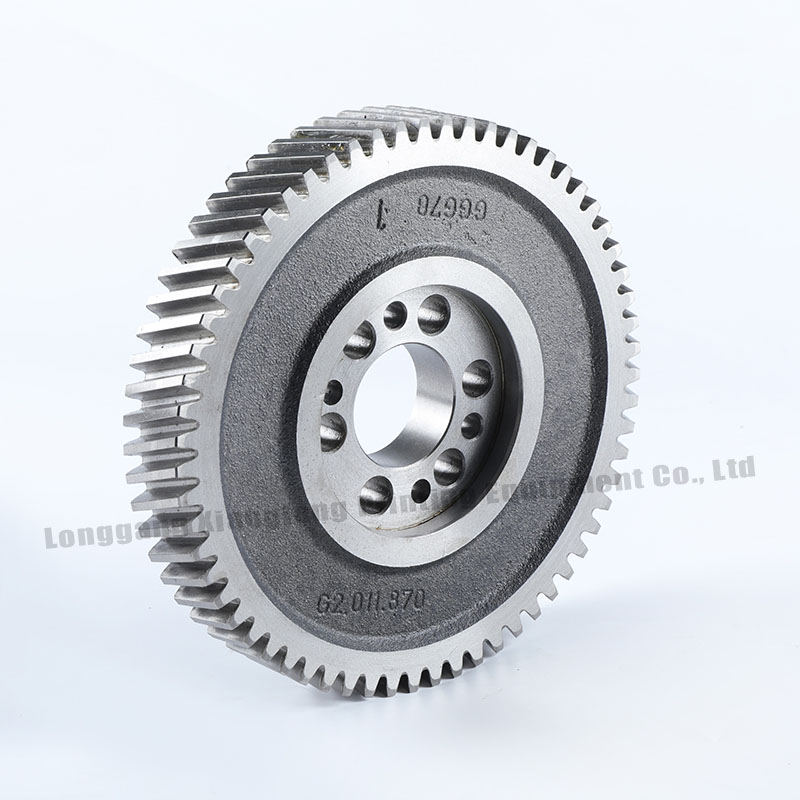
Material selection directly influences bearing behavior. High-carbon steel bearings are commonly used for standard applications, while hybrid or ceramic-bearing designs are introduced in environments requiring reduced friction or improved thermal stability. Operational measurements show that optimized bearing selection can reduce vibration-related print defects by approximately 10–15%.
In addition to load handling, bearing thermal performance affects operational stability. Continuous rotation generates heat, and an uncontrolled temperature rise can alter internal clearances. Bearings designed for printing machines often maintain dimensional stability under moderate thermal variation, helping preserve alignment accuracy during long production shifts.
Key functional requirements include:
Lubrication management is central to bearing service life. In printing environments, bearings may be lubricated using grease or oil circulation systems, depending on load and speed. Improper lubrication is a leading cause of bearing degradation. Facilities that implement condition-based lubrication schedules often extend bearing service intervals by several thousand operating hours.
Bearing precision also affects print quality. Excessive bearing clearance or wear can introduce micro-movements in rollers, leading to uneven ink transfer or image variation. Regular inspection of temperature rise and vibration patterns allows early identification of bearing wear before quality degradation becomes visible.
Environmental factors such as humidity and cleaning agents also influence bearing performance. Protective seals and shields are commonly used to limit contamination ingress. Bearings designed with sealed configurations help maintain consistent operation in demanding production settings.
In summary, Printing Machine Bearing systems contribute to continuous operation by supporting rotational accuracy, load stability, and controlled motion across various machine components. Appropriate selection of bearing type, regular lubrication, and careful monitoring of temperature and vibration support consistent performance over extended production cycles. These practices help maintain operational stability and support steady print quality throughout routine and ongoing use.
FAQs
How does bearing wear affect print quality?
Wear can cause vibration and uneven ink transfer.
Can bearing maintenance reduce downtime?
Yes, proactive maintenance supports predictable operation.
Where are bearings used in printing machines?
Bearings support rollers, cylinders, and transmission shafts.
How does bearing wear affect print quality?
Excessive wear causes vibration, misalignment, and uneven ink transfer.
What materials are used for printing machine bearings?
High-carbon steel, hybrid, and ceramic bearings are common, depending on load and speed.
How often should bearings be inspected?
Inspection intervals depend on operating hours, load, and environmental conditions.
Does temperature affect bearing performance?
Yes, excessive heat can alter internal clearances and reduce alignment accuracy.
What lubrication methods are used for bearings?
Grease or oil circulation systems are often combined with condition-based maintenance.
Can bearing failure damage other machine components?
Yes, misaligned or worn bearings can cause roller damage or print defects.

+86-19818583496
+86-0577-68586867


No.777 Haixi rode, Longgang City, Wenzhou City, Zhejiang, China
On weekdays, we will reply to you or call us within 12 hours of receiving the inquiry.
Copyright © Xiangfeng Printing Equipment Co., Ltd. All Rights Reserved.

Printing Machine Accessries Factory
Contact Us