

 Español
Call us
+86-19818583496
+86-0577-68586867

Our team is proud to offer on time guarantee and product guarantee to customer satisfaction.
Read MorePrinting Machine Gear assemblies are responsible for transmitting motion between rotating components while maintaining precise synchronization. In printing equipment, gear accuracy directly affects timing, registration, and overall mechanical coordination across the production line. High-precision gears help ensure that multi-color printing units align consistently, even at production speeds exceeding 8,000 sheets per hour.
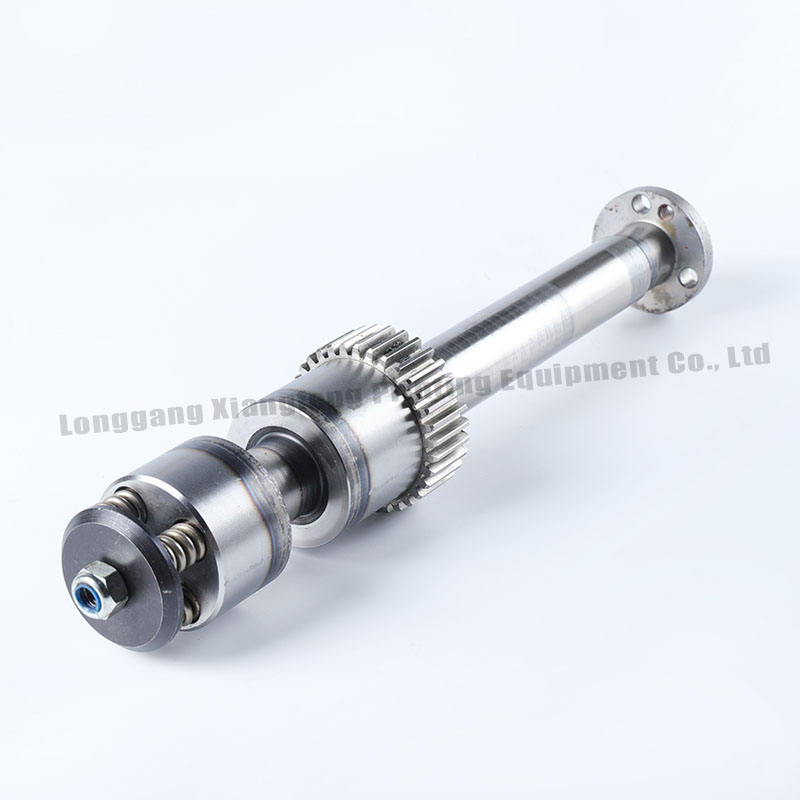
Gear systems connect main drive motors to rollers, cylinders, and auxiliary mechanisms. In multi-color printing machines, gear synchronization ensures consistent alignment between successive print units. Even minor deviations in gear backlash of 0.02–0.05 mm can affect color overlap and image consistency. Operational assessments indicate that controlled gear tolerances help reduce registration variation by approximately 12–18% during extended production runs.
Gear material and manufacturing quality are critical factors. Alloy steel gears with surface hardening treatments are commonly used to support durability and wear resistance. In high-duty printing lines, gears may operate continuously for 5,000–8,000 hours annually, requiring stable tooth profiles and uniform load distribution.
Gear geometry also influences mechanical efficiency. Optimized tooth profiles reduce sliding friction during engagement, supporting smoother power transmission. In practical operation, reduced friction contributes to lower energy consumption and more stable rotational behavior across interconnected components.
Typical performance considerations include:
Lubrication plays an important role in gear performance. Proper lubrication reduces friction and limits heat generation. In enclosed gearboxes, oil temperature monitoring often identifies abnormal conditions before they affect performance. Stable lubrication contributes to predictable motion transfer and reduced operational noise.
Gear alignment is equally important. Misalignment can increase localized stress and accelerate wear. During installation and maintenance, alignment checks are conducted to ensure smooth engagement. Facilities implementing regular gear inspection routines report improved operational stability and up to 15% fewer mechanical interruptions.
Gear systems also influence maintenance planning. Predictable wear patterns allow replacement schedules to be planned without disrupting production. This structured maintenance supports continuous operation and consistent printing quality.
In conclusion, Printing Machine Gear systems support accurate motion transfer by maintaining synchronization, mechanical stability, and controlled engagement. Through precision manufacturing, lubrication management, alignment verification, and monitoring of operational data, gears enable steady and reliable printing performance in high-speed production lines.
FAQs
Why is gear accuracy important in printing machines?
Accuracy ensures proper synchronization, print alignment, and consistent image registration.
What materials are commonly used for printing gears?
Alloy steels with surface hardening or other wear-resistant treatments are widely applied.
Can gear misalignment affect energy efficiency?
Yes, misaligned gears increase friction, causing higher energy consumption.
How long can printing machine gears operate continuously?
High-quality gears can function for several thousand operational hours with proper maintenance.
What role does lubrication play in gear performance?
Lubrication reduces friction, limits heat generation, and maintains stable motion transfer.
Does tooth profile influence gear lifespan?
Yes, optimized tooth geometry lowers wear and improves transmission efficiency.
Why is gear accuracy important in printing machines?
It ensures proper synchronization, registration, and consistent print quality.
What materials are used for printing gears?
Alloy steels with surface hardening treatments are commonly used.
How is gear wear monitored?
Through inspection, noise analysis, and lubrication condition checks.
Do gears require regular lubrication?
Yes, proper lubrication reduces wear and thermal stress.
Are printing machine gears affected by environmental conditions?
Ink mist, dust, and temperature changes can influence wear if not properly protected.
Can gears in high-speed machines last for years without replacement?
With proper material, lubrication, and monitoring, gears can operate reliably for thousands of hours.

+86-19818583496
+86-0577-68586867


No.777 Haixi rode, Longgang City, Wenzhou City, Zhejiang, China
On weekdays, we will reply to you or call us within 12 hours of receiving the inquiry.
Copyright © Xiangfeng Printing Equipment Co., Ltd. All Rights Reserved.

Printing Machine Accessries Factory
Contact Us